

PLENARIES
The EMGN-26 Steering Committee has invited and also received requests from renowned distinguished scientists from all over the world to offer plenaries on cross-cutting themes of materials science. We wish to express gratitude to those who have agreed to serve as plenary speakers (click to open content):
Plenary 1: Valorization of Lignocellulosic Materials
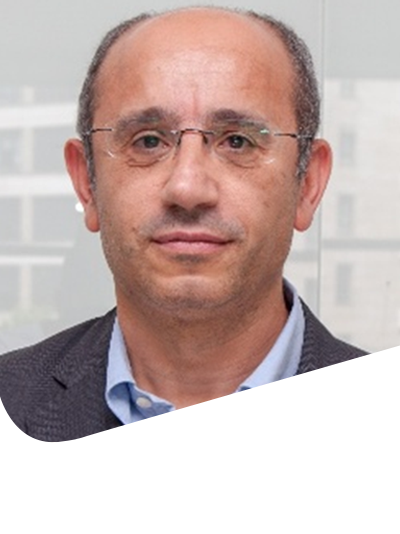
Jalel Labidi

Jalel Labidi is a chemical engineer who graduated from the National Engineering School of Gabès (Tunisia) and holds a PhD in Chemical Engineering from the National Polytechnic Institute of Lorraine (France). He is currently a Senior Researcher in the Department of Chemical and Environmental Engineering at the University of the Basque Country (Spain).
His research focuses on the development of biorefineries within a circular economy framework. He applies green chemistry principles and process intensification strategies to improve the efficiency and sustainability of biomass fractionation and its conversion into bio-based chemicals and biopolymers. His work also addresses the technical, economic, and environmental feasibility of biorefinery processes.
Dr. Labidi has authored more than 350 articles in peer-reviewed scientific journals and has an H-index of 75. He has supervised 35 PhD theses. He currently serves as Associate Editor of Industrial Crops and Products (Elsevier) and Frontiers in Energy Research: Bioenergy and Biofuels (Frontiers), and is a member of the editorial boards of several other international journals.
Plenary 2: Shaped Nanoporous Materials: Transforming the Future of Molecular Decontamination
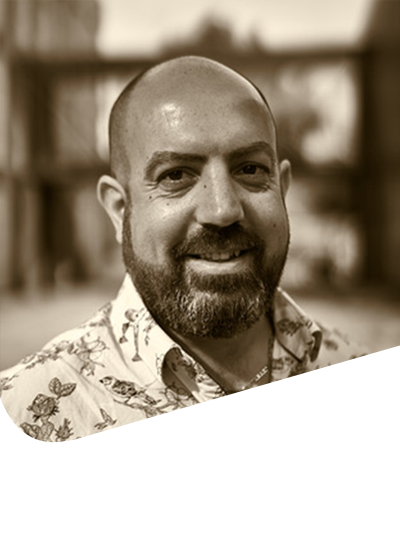
Jean Daou
Full Professor at the University of Haute Alsace (UHA), France
Molecular contamination in satellites has drawn attention of space industries. Indeed, once satellites are in orbit, it is impossible to control the outgassing of molecules from paints, glues or varnishes. The chemical nature of these outgassed volatile organic compounds (VOCs) has been investigated by the National Aeronautics and Space Administration (NASA) and was identified as hydrocarbon and plasticizers derivatives. Those molecules can deposit on the surface of on-boarded equipment like optics and damage them. After testing several porous materials as molecular adsorbents to fix the molecular contamination issue, zeolites have been designed as the ideal candidates thanks to their great adsorption capacities, and especially their ability to trap the volatile organic compounds at very low concentration in the atmosphere. We have shown in collaboration with the French Space Agency (CNES) that zeolites could be successfully used to adsorb VOCs in satellites, particularly with zeolite pellets trapping pollutants within the ChemCam and SuperCam instrument on-board of Curiosity and Perseverance Rovers respectively, currently on planet Mars.
Jean Daou is Deputy Director of the Institute of Materials Science of Mulhouse (IS2M, UMR 7361) and Full Professor at the University of Haute-Alsace (UHA), France. He obtained his PhD in Materials Chemistry in 2007 from the University of Louis Pasteur in Strasbourg. In 2008, he joined the University of Haute-Alsace, where he has since developed research projects focused on the design of porous materials for applications in catalysis, adsorption, and environmental protection.
In 2018, he was appointed for a five-year term as a junior member of the prestigious Institut Universitaire de France (IUF). From 2018 to 2023, he also served as President of the French Zeolite Association (GFZ).
His research activities are structured around three main areas. The first focuses on the synthesis of porous materials with controlled size and the investigation of their textural and structural properties. The second addresses the shaping and processing of these nanoporous materials. The third explores their application in fields such as energy storage and molecular decontamination. This work has enabled him to develop broad expertise spanning nanomaterials design, synthesis methods, characterization techniques, and their integration into practical applications.
Professor Daou has coordinated more than 35 research projects funded by institutions such as the European Union, the French National Research Agency (ANR), and industrial partners including APTAR CSP Technologies. He has authored over 142 international publications and holds 18 patents. Among his distinctions, he received the 2020 Researcher Prize from the Solid-State Chemistry Division of the French Chemical Society (SCF), as well as the 2020 Science Prize of the Rhenane Academy.
Plenary 3: Lithium-Ion Batteries: From Advanced Materials to Emerging Market Opportunities
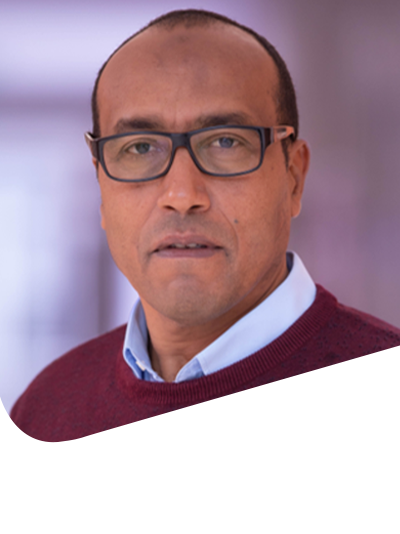
Ismael Saadoune
Lithium-ion batteries are central to electric mobility, portable electronics, and renewable-energy storage. Their rapid market growth is driving the demand for safer, more affordable, and higher-performance technologies.
Advanced cathode, anode, electrolyte, and separator materials are essential to improving energy density and cycle life. Promising developments include high-voltage cathodes, silicon-based anodes, lithium-metal systems, and solid-state electrolytes. However, interfacial degradation, thermal instability, limited fast-charging capability, and material scarcity remain major challenges.
The expansion of electric vehicles and stationary storage is reshaping global battery markets and industrial supply chains.
Future competitiveness will depend on balancing performance, safety, cost, manufacturability, and environmental impact.
This presentation reviews recent materials advances, emerging market trends, and the scientific and industrial challenges shaping next-generation lithium-ion batteries.
Ismael Saadoune is a Full Professor at Mohammed VI Polytechnic University. He completed his academic journey with a French PhD from the University of Bordeaux in 1992 and a Moroccan PhD from the University Cadi Ayyad UCA-Marrakech in 1996. His dual doctoral pursuits centered on advancing Active Materials for Lithium and Sodium-ion Batteries, offering promising solutions for energy storage challenges.
As the principal investigator, he spearheaded 19 national and 28 international research projects on Battery Materials, demonstrating his commitment to advancing energy storage technologies. His contributions extend beyond academia, as he played pivotal roles in two European Master ERASMUS MUNDUS programs: 'Materials for Energy Storage and Conversion' and 'Functionalized Advanced Materials and Engineering'.
Dr. Saadoune's expertise has been sought after globally, with invitations to prestigious universities and research centers including Uppsala University (Sweden), Karlsruhe Institute of Technology (Germany), ICMM-CSIC (Spain), Jilin University (China), and Bordeaux University (France). His prolific academic output encompasses over 190 articles, conference papers, and project reports, underscoring his significant contributions to the field of electrochemical energy storage and conversion.
Plenary 4: Engineering waste-derived zeolite molecular sieves for advanced separations
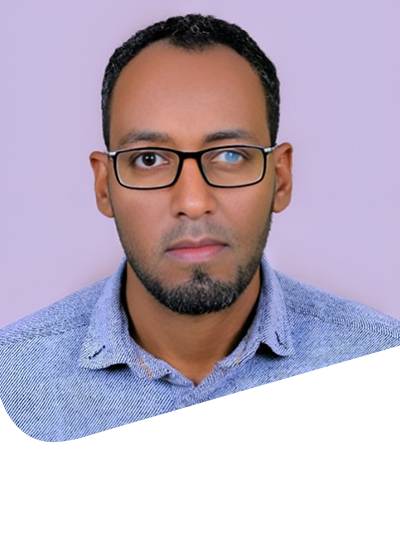
Ayalew H. Assen
Since their 1950s debut, zeolites are widely used in industry as catalysts, ion exchangers, and adsorbents, and remain key in separation and purification technologies. For large-scale, high-throughput production, zeolites need cost-effective, scalable, environmentally friendly synthesis methods. Using industrial waste as a precursor is a viable option. In this regard, the phosphate industry is a practical source of such waste, generating large quantities of byproducts across its value chain, from mining and beneficiation to fertilizer production. The chemical makeup of these byproducts makes them potential candidates for engineering functionalized zeolites with diverse compositions and structures. This work demonstrates the development of various synthesis routes for transforming phosphate industry byproducts into zeolite molecular sieves with different topologies, pore dimensions, and chemical compositions. Various characterization methods (XRD, TGA, FTIR, SEM-EDX, and gas sorption) were applied to the synthesized zeolites to understand their structural and compositional characteristics. The byproduct-composition-directed assembly also led to superior performance of the synthesized heteroatom-decorated zeolites in selective CO2 capture from different sources (Direct air capture and flue gas conditions) and heavy-metal removal from aqueous solutions.
Ayalew H. Assen is an Assistant Professor at Mohammed VI Polytechnic University (UM6P). With a diverse academic and professional journey, Dr. Assen brings expertise in functional porous solid-state materials, including metal-organic frameworks (MOFs), zeolites, and mesoporous silica, with a focus on energy and environmental challenges. Dr. Assen earned a PhD from King Abdullah University of Science and Technology (KAUST) in 2018, following double MSc degrees - one in Advanced Spectroscopy in Chemistry (ASC Master) through the Erasmus Mundus program at the Université de Lille and Universität Leipzig, and another in Organic Chemistry from Addis Ababa University. Dr. Assen’s professional career spans multiple roles, including a two-year postdoctoral fellowship (2020-2022), a senior scientist position (2023), and an assistant professor position (2023-present). Dr. Assen has authored/co-authored over 45 highly cited publications in prestigious journals. The core of Dr. Assen’s research lies in the design, synthesis, characterization, and application of porous materials for gas/vapor adsorption and separation, sensing, wastewater treatment, and other areas critical to addressing global energy and environmental challenges.
Plenary 5: Plasma Physics: Fundamentals, Advanced Diagnostics, and Applications
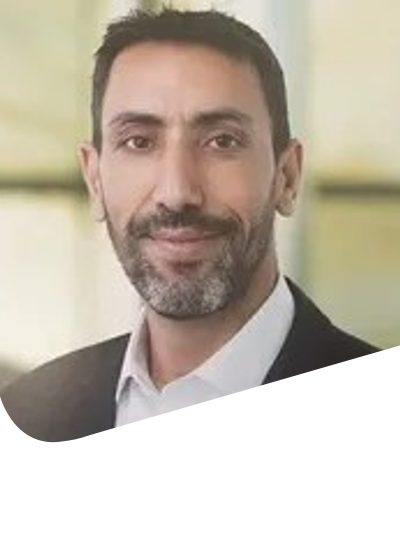
Et-touhami Es-sebbar
Interest in low-temperature atmospheric-pressure plasmas has grown significantly due to their unique properties and wide range of applications. In particular, plasma plays a crucial role in material processing, where energetic electrons, ions, photons, and reactive species interact with surfaces and modify their physical and chemical properties. Plasma technologies are therefore attractive for surface treatment, material modification, medicine, agriculture, and environmental applications.
Non-thermal plasmas can generate highly reactive species such as O and N atoms, Ar* metastables, and NO radicals. Understanding fundamental plasma processes, chemical kinetics, and the concentrations of these species is essential for controlling and optimizing plasma-based applications.
In this contribution, advanced in-situ laser diagnostics are used to measure the absolute concentrations of key plasma species, including O and N atoms, NO radicals, and Ar* metastables. Concentrations in the range of 10¹³–10¹⁴ cm⁻³ are measured under different operating conditions.
The results show that species concentrations strongly depend on gas flow rate, position within the plasma, energy input, and residence time. Kinetic models are also used to support the measurements and provide insight into the main processes controlling species formation and evolution. This work highlights the importance of combining plasma physics, advanced diagnostics, and modeling to better understand and optimize plasma processes for material processing and other emerging applications.
Et-touhami Es-sebbar is a specialist in plasma physics and its applications, advanced laser diagnostics and spectroscopy, chemical kinetics, and physical chemistry. He is currently a Full Professor at Mohammed VI Polytechnic University (UM6P). He has published more than 50 peer-reviewed articles in internationally recognized, high-impact journals, including Applied Energy, Fuel, Journal of Applied Physics, Combustion and Flame, and The Astrophysical Journal, among others. He has previously held research and academic positions at KAUST (Saudi Arabia), CNRS (France), the Paul Scherrer Institute (Switzerland), and Université Paris-Est Créteil (France).
At the Applied Chemistry and Engineering Research Center of Excellence (ACER CoE) of UM6P, Prof. Es-sebbar’s research focuses on plasma-assisted processes, sustainable energy applications, physical chemistry, and the development of advanced laser spectroscopy techniques for investigating chemical kinetics. His work is supported by strong international collaborations and includes contributions to major scientific conferences and research projects. He is also actively engaged in teaching and academic activities at UM6P.
Plenary 6: Transforming Mine Wastes into Sustainable Construction Materials: A Circular Economy Approach
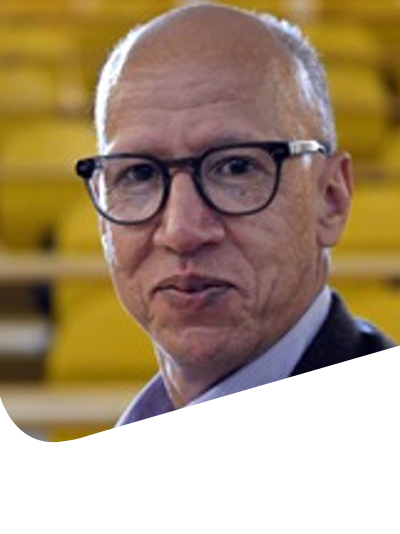
Rachid Hakkou
The mining industry generates vast quantities of waste rocks and tailings that represent major environmental and land-use challenges, while also constituting a significant yet underutilized secondary resource. Their valorisation in construction offers a promising pathway to address both waste management and resource scarcity by reducing reliance on virgin raw materials and promoting circular resource flows. This keynote highlights recent advances in the sustainable reuse of mine wastes as alternative construction materials, based on comprehensive chemical, mineralogical, physical, and geotechnical characterization.
Emphasis is placed on phosphate and coal mining wastes, two abundant mine wastes in Morocco with high valorisation potential. Research findings demonstrate that phosphate waste rocks can be successfully incorporated into a wide range of construction products, including cementitious binders, concrete and mortar additives, geopolymers, fired bricks, ceramics, and road aggregates. Laboratory and pilot-scale studies confirmed performances comparable to those of conventional construction materials, including applications in structural concrete.
The keynote also presents an integrated circular approach developed for coal mine wastes from the Jerada mining district, combining residual coal recovery by froth flotation with the reuse of processed tailings in fired-brick production and the utilization of waste-rock-derived aggregates for concrete applications. These case studies illustrate how mine wastes can be transformed into value-added materials, fostering industrial symbiosis, improving resource efficiency, and supporting the transition toward a low-carbon and circular construction sector.
Rachid Hakkou holds a postgraduate diploma (DESS) in Subsoil Resource Development from the Nancy School of Geology, France. In 1993, he obtained a doctorate in Geosciences and Raw Materials from the Institut National Polytechnique de Lorraine. He subsequently earned a PhD in Waste Management and Treatment from Cadi Ayyad University, Faculty of Science and Technology, Marrakech, in 2001.
He is currently a Professor of Higher Education at Cadi Ayyad University, where he teaches the Mining Environment module in the Department of Earth Sciences and Industrial Chemistry in the Department of Chemical Sciences. Since 2006, he has also been an Associate Professor at the Université du Québec en Abitibi-Témiscamingue, Canada. Since 2016, he has served as an Affiliate Professor at Mohammed VI Polytechnic University in Benguerir, Morocco.
His research focuses primarily on the valorization of mine waste and the development of innovative strategies for the rehabilitation and sustainable management of mine sites.
From 2009 to 2018, Prof. Hakkou held the International Development Research Centre (IDRC, Canada) Research Chair on Management and Stabilization of Industrial and Mining Waste at Cadi Ayyad University. Throughout his career, he has delivered numerous lectures and seminars on mine waste management and post-mining rehabilitation. He has authored more than 180 scientific articles in international journals and has a Scopus h-index of 40. He has also chaired three international congresses dedicated to mine waste management and post-mining sustainability.
His contributions to research and innovation have been recognized through several prestigious distinctions. In 2016, he received the Hassan II Prize for the Environment (2015 Edition) for his work on Mine Waste Management for Sustainable Mining Development in Morocco. In 2020, he was awarded the David Hopper Award for Leadership in Research for Development by IDRC Canada.
More recently, in 2024, he received the Erasmus Mundus Impact Award during the 20th-anniversary celebration of the Erasmus Mundus programme, at a reception hosted by the Ambassador of the European Union to Morocco.
Plenary 7: Functionalized Bio-based Materials for Lithium-ion Batteries: toward safer and sustainable energy storage
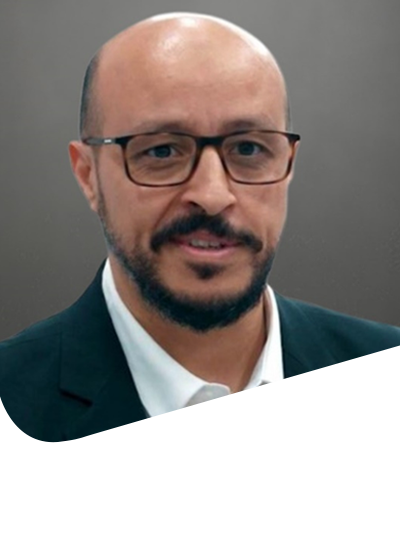
Hicham Ben Youcef
All-solid-state lithium batteries are experiencing strong development and are estimated to be the next marketable generation. Solid electrolytes are promising candidates for safe high energy density battery applications due to their intrinsic properties, mechanical flexibility, and scalability to the thin-film conducting configuration. Moreover, sustainable solutions for materials development are gaining more focus, helped by the establishment of constraining environmental regulations. Thus, the use of bio-based materials is a promising solution, especially, for the preparation of environmentally friendly solid polymer electrolytes. The functionalization of bio-based materials with delocalized anionic structures is an interesting approach towards increased electrochemical, flame-retardancy and mechanical stability and ionic conductivity of composite solid electrolytes. These composites are the direction that should be prioritized for future research for developing safer, more efficient, reliable, and cost-effective electrochemical energy storage systems (e.g., batteries, supercapacitors).
Hicham Ben Youcef is a Full Professor at Mohammed VI Polytechnic University (UM6P). He obtained his Ph.D (Chemistry) in 2009 from the Swiss Federal Institute of Technology Zurich (ETHZ), Switzerland. His thesis was devoted to engineering parameters for the development of highly stable, reliable and cost-effective proton exchange membranes for hydrogen fuel cells. Thereafter and as a Postdoctoral researcher at Paul Scherrer Institut (PSI), Switzerland, he participated in "S-chain project" and "Green Power project", a joint venture between Belenos Clean Power (Swatch® Group), Ecole Polytechnique Fédéral de Lausanne (EPFL) and PSI for the development of zero-emission car concept based on low temperature Fuel Cells. The project involved the manufacture of a prototype hydrogen car (30 kW) based on proton exchange membrane fuel cell technology.
From 2011 to 2014 and between 2016 and 2017 he joined Chemspeed Technologies AG (part of Bruker Corporation) as an application automation and R&D automation chemist. Swiss company specialized in automation and high-throughput solutions and workflows design for the chemical-biochemical process industry and applied research. The focus was on the integration of automated platforms for the acceleration of research and development and to increase the reliability of processes and products.
In between these positions, Dr. Ben Youcef was a scientific researcher at CIC Energigune in Spain, working on the development of cathode materials for Lithium-Sulfur batteries and organic electrodes and solid polymer electrolyte materials for All-Solid-State Lithium/Sodium batteries.
Currently, Dr. Ben Youcef leads the High Throughput Multidisciplinary Research Laboratory (HTMR) within the college of Chemical Sciences & Engineering (CCSE) at /UM6P. His main interests are the development of new and smart/Self-healing materials for electrochemical energy storage and conversion (Fuel cells, Batteries) towards competitive targets (performance, durability and cost) using automated workflow design.